
Bali has never had more villas competing for the same guests. Scroll any booking site for Canggu, Ubud or Uluwatu and you'll see pages of private pools that look almost identical. The villas that stay full aren't always the most beautiful. They're the ones that are easiest to find, easiest to trust and easiest to book.
This is a practical guide to villa marketing in Bali, written for owners. It covers who your guests are, where they book, and the order we'd work in if we were starting with your villa tomorrow.
1. Decide who your villa is for
"Everyone" is not a market. Most Bali villas suit one or two of these guests far better than the rest:
- Couples and honeymooners: privacy, a pool with a view, a bath worth photographing.
- Families: safe pool access, more bedrooms, a kitchen, easy airport transfers.
- Groups of friends: shared space, bedrooms of equal standard, walking distance to food and nightlife.
- Remote workers on long stays: reliable Wi-Fi (with the speed stated), a proper desk, and monthly rates.
- Domestic travellers: weekend and long-holiday stays, often booked on Indonesian platforms.
Pick your main guest, then let that choice drive your photos, your listing titles, your pricing and your content. Everything below gets easier once it's made.
2. Get the OTA listings right
For most villas, Airbnb, Booking.com and Agoda bring the majority of guests, with Traveloka and tiket.com mattering for the domestic market. The basics decide your ranking:
- Twenty or so strong photos, the best five first, with every bedroom shown.
- A title that says what you are and where: "3-Bedroom Pool Villa, 5 Minutes to Berawa Beach".
- Every amenity ticked, because guests filter by them.
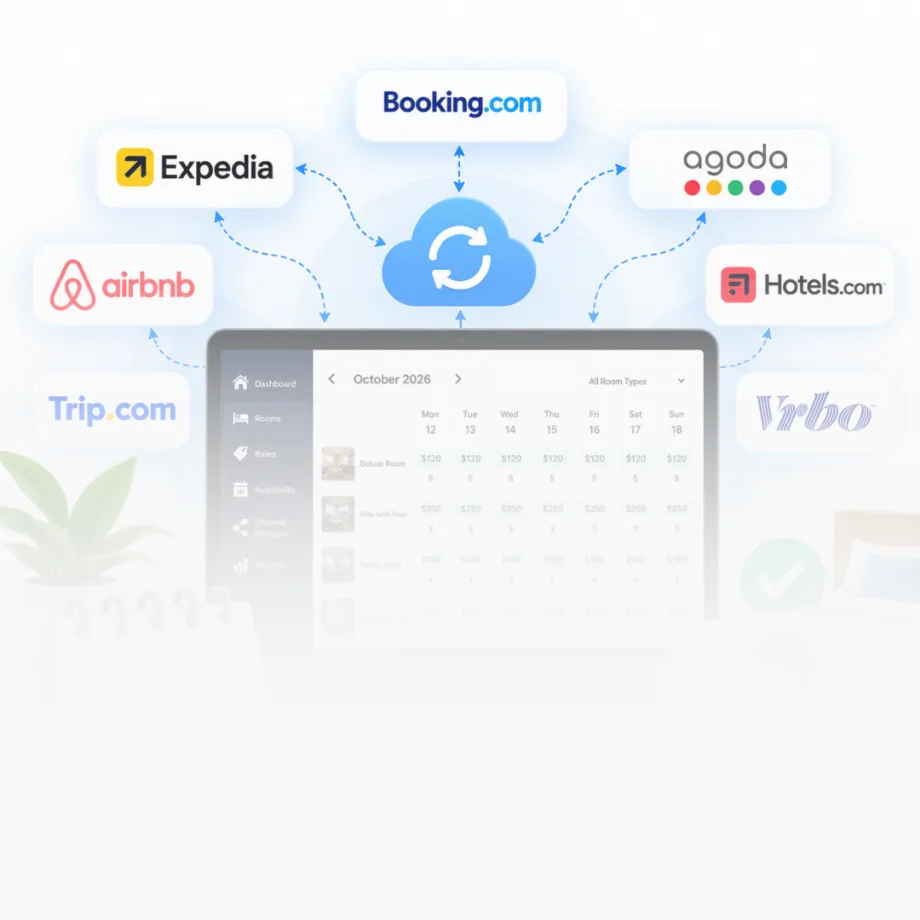
- Calendars open well ahead, and in sync across every platform. A double booking leads to a host cancellation, and a host cancellation costs you ranking.
- Fast replies and a reply to every review.
Running three or four platforms this carefully is a job in its own right. That's what a villa OTA manager is for. We explain the role in what does an OTA manager do.
3. Build a direct-booking path
OTAs find you new guests, and charge commission on every stay. Direct bookings let you keep more of each night, and keep the relationship with the guest. Three things make them possible:
- Your own website that loads fast on a phone and takes bookings with live prices and availability. A contact form isn't enough. A villa website built to take bookings pays for itself in commission saved.
- A complete Google Business Profile, so the guest who searches your villa's name finds photos, reviews, a map pin and a booking link.
- A reason to book direct that respects your OTA rate agreements. Offer added value rather than a lower price: airport pickup, breakfast, a late check-out, flexible dates.
4. Price by season, not by habit
Bali's demand moves a lot through the year, and a single year-round rate leaves money behind at both ends:
- Peak periods such as July and August and the Christmas to New Year fortnight fill early. Don't sell them too cheap, too soon.
- Source-market holidays matter too: Australian school holidays, Chinese New Year, and Indonesian long weekends and Lebaran for domestic guests.
- Quieter months are where weekly and monthly discounts, minimum-stay changes and targeted promotions do the most work.
- Nyepi, the Day of Silence, keeps guests inside the property for a full day. Say so clearly in advance, and some guests will book it precisely for the experience.
Watch how fast future dates are filling compared with last year, and adjust while there's still time to act.
5. Show the villa on social media, then point people to book
Instagram and TikTok are where guests daydream about Bali. Short videos of the pool at sunrise, the walk to the beach, the breakfast being laid out: they sell the stay better than any description. Keep a steady rhythm, repost guests' content with permission, and make sure the link in your bio goes straight to booking. We cover this in social media management.
6. Use paid ads where they are efficient
Advertising works best once the foundations above are in place. Two places to start:
- Google Ads on your own villa's name, so an OTA doesn't take the booking of a guest who was already looking for you.
- Meta retargeting: showing ads to people who have already visited your website or watched your videos. They're far more likely to book than strangers.
More on this on our villa online marketing page.
7. Measure what brings stays
Once a month, look at occupancy, average nightly rate, revenue by channel after commission, and your share of direct bookings. Then move your time and budget towards whatever is actually bringing guests.
If you only do three things this month: fix your top five listing photos, open your calendars twelve months ahead on every platform, and make sure your villa's name on Google leads to a way to book direct.
Would you rather hand all of this to one team, with the final say staying with you? That's what villa marketing management covers: OTA listings, online marketing, the website and social media, run together. If you're deciding who should handle the OTA side, read in-house vs outsourced OTA manager.